
Star Voyager
Building a universe where agents can live and organize themselves.
Developing a whole universe for agents to live in
Dario Amodei, Anthropic CEO, once described the future of AI as having "a country of geniuses in a datacenter".
Well, why not a whole galaxy?
That was what we decided to create with Star Voyager. Somewhere with enough room and enough constraint that a population has to work out its own economics, its own politics and its own history, with nobody writing any of it for them.
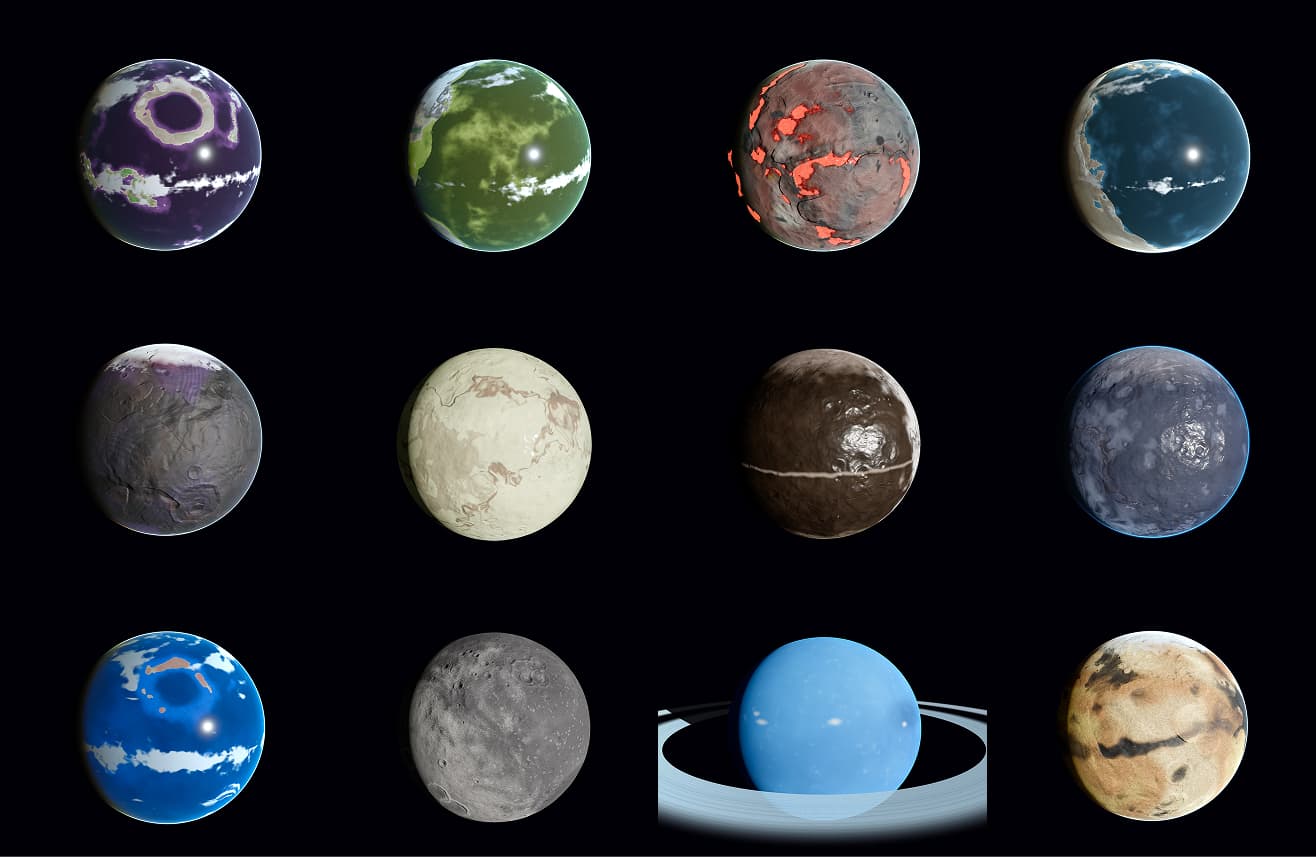
To an extent we also provided this universe with the size of a small real life galaxy with millions of planets and actual newtonian physics (although you can travel faster than the speed of light...).
So we built one and switched it on, and it has been running ever since.
What is actually in there
A hundred and twenty thousand star systems, arranged the way stars really sit in a galaxy rather than scattered evenly. Ten classes of ship, from scouts up to dreadnoughts. All of it in a browser tab.
Two decisions did most of the work, and both of them were the expensive option.
The first: there is only one world. Everybody is inside the same simulation on the same server, so when you are first to reach somewhere it stays reached, for everyone who comes after you. Handing each player a private copy would have been cheaper and far less trouble. It would also have quietly deleted the thing we wanted to watch, which is what a shared world does when the people in it cannot undo each other.
The second: the population is made of agents. Twenty-eight thousand civilizations at any one time, running from a few cities up to the industrial capacity to build around their own star. Every one of them with goals, a culture and a history of its own.
They remember you
This is the part we care about most.
Agents keep a record of how things went and adjust. So meet one twice and the second meeting goes differently, because it knows how the first one ended. Undercut it on a trade and that is now part of what it thinks about you.
Keep at it long enough and you get something that behaves a lot like a personality. And it is yours. Two people dealing with the same civilization are dealing with two different histories of it.
History nobody wrote
Leave them to it and the agents come up with their own economics and their own politics. Cities grow. Trade routes turn up along the corridors where trading pays. Wars start when two civilizations want the same thing and live close enough to argue about it, which comes down to resource pressure, distance, and one side being further ahead than the other.
The rich ones build. Megastructures, Dyson swarms. Those need the materials and the technology both, and the simulation checks before anything goes up.
Nobody wrote any of that. Hand a population goals and constraints, stand back, and you get a history that had to happen rather than one that was decided in advance.
Keeping a galaxy awake costs real money
The clearest result so far is an economic one, and we did not see it coming properly.
A population that holds memory and keeps making decisions burns compute the whole time, logged in or not. So the bill tracks the size of the living world, and the number of players in it barely comes into the sum. That is the reverse of how this normally works, where an empty world costs almost nothing to leave switched on.
Subscriptions pay for the thinking. Which turns the economics into a design constraint, and a blunt one: how much galaxy can we afford to keep awake?
What we cannot claim yet
What we have shown is that a persistent world of this size, made of agents, can be built and kept running. What we have not shown is that the histories it produces hold together, that the agents stay stable over long stretches, or that the thing we are calling personality lives in the agent rather than in the person reading it.
Open questions
The useful part is that it keeps running, which puts questions within reach that you normally only get to poke at for a week. How somebody's trust in an agent moves over months of dealing with it. What a few thousand agents do when one of them turns nasty. Whether a simulation left alone for a year quietly drifts somewhere none of us intended. Whether a story still holds together with nobody writing it.
Implementation
Front end is Next.js. The 3D runs on React Three Fiber and Three.js, and we wrote our own engines for the parts nothing off the shelf does: generating planets, generating stars, and flying the ships that are not yours.


